
Building Emotional Intelligence into AI Avatars for Better Interactions

An AI avatar can deliver the right information and still leave someone feeling unheard. Emotional intelligence helps close that gap by enabling an avatar to notice possible emotional cues, consider the conversation’s context, and choose a useful response. The aim is not to make software feel emotions. It is to make interactions more attentive, respectful, and easy to navigate.
What Emotional Intelligence Means for AI Avatars
Emotional intelligence in AI avatars is the ability to interpret possible emotional signals and respond in a contextually appropriate way. Detecting a cue is only the first step; the avatar must also avoid assumptions and offer a response that helps the user.
An AI-generated avatar might use natural language processing to identify frustration in a message, or analyze a pause and a change in voice tone. That signal is not proof of how a person feels. A user may sound tired because of a poor microphone, or write a short reply because they are busy.
This distinction matters: emotion recognition estimates; it does not read minds. A well-designed avatar treats an estimate as a reason to check in, not a fact to announce. For example, instead of saying, “You are angry,” it could ask, “Would you like me to explain that another way?” The second response gives the user room to correct the system and keeps the conversation focused on their needs.
How Avatars Read Emotional Cues
Emotionally responsive avatars can consider language, voice, facial expressions, and interaction patterns, but no single cue reliably explains what a person feels. Combining signals can add context, yet ambiguity remains.
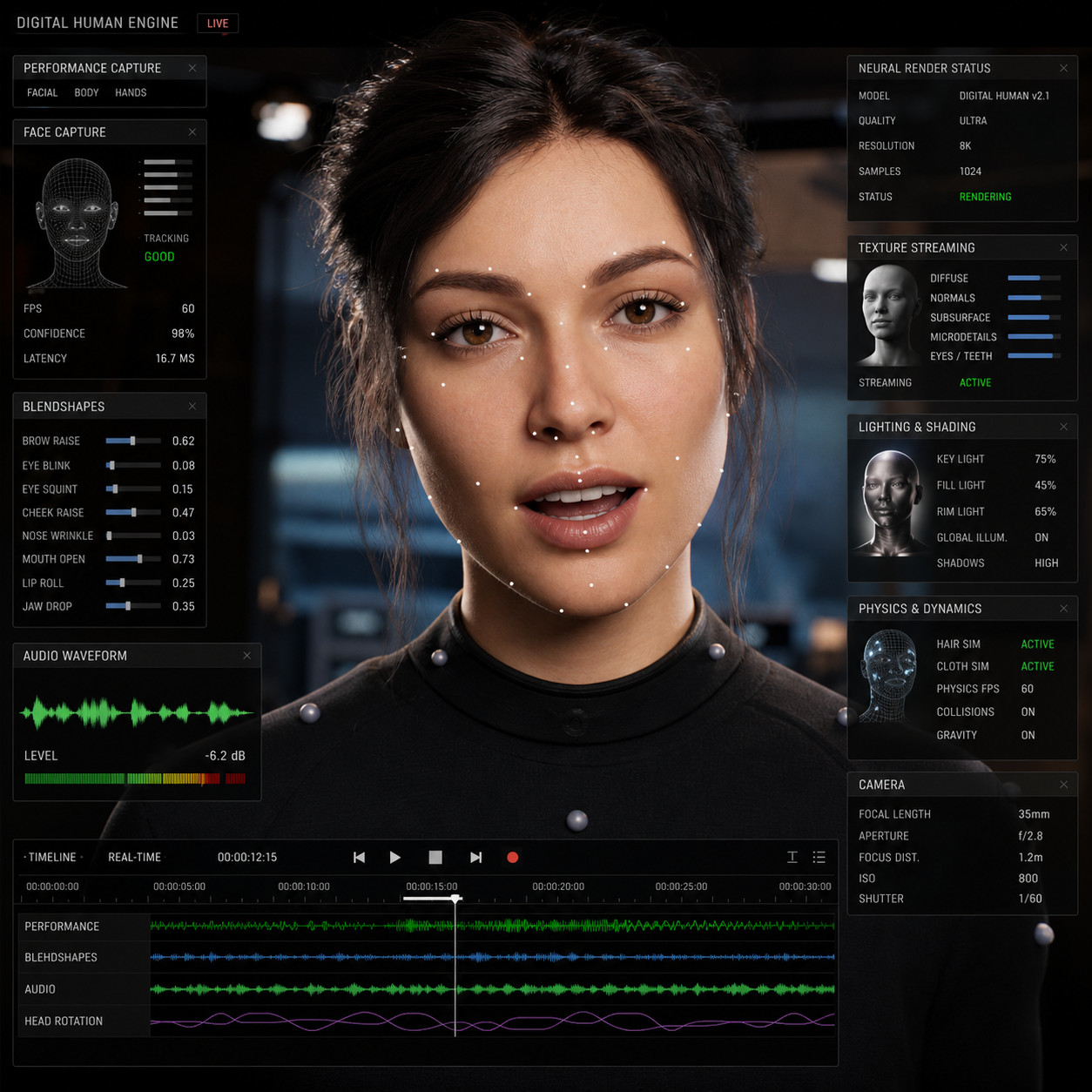
Sentiment analysis can identify positive, negative, or uncertain language. More detailed language models may pick up on urgency, confusion, or a request for reassurance. Voice analysis can look at features such as pace, volume, and pauses. With permission and suitable technology, visual systems may interpret facial expressions or other visible signals.
Each input has limits. Sarcasm can confuse text analysis; background noise can distort voice cues; facial expressions vary between people and situations. Cultural context also shapes how emotion is expressed. A smile may signal warmth, politeness, or discomfort, depending on the person and setting.
For that reason, avatars should use cues as tentative context, not a score that dictates a response. They should rely on the least sensitive information needed, and give greater weight to what users say they want. If someone writes, “Please just show me the steps,” that explicit request should outweigh an uncertain inference that they need reassurance.
Designing Responses That Feel Empathetic and Useful
To make avatar responses feel empathetic, connect a cautious reading of the situation to a practical next step. Use clear language, appropriate expression, and pacing that supports the task rather than drawing attention to the avatar itself.
A useful response pattern is notice, offer, let the user choose. The avatar can acknowledge a possible difficulty without labeling the user, suggest a relevant option, and let them accept or dismiss it. If a customer is repeating a question, for instance, the avatar might say, “I may not have answered clearly. Would a shorter explanation or a step-by-step version help?”
Nonverbal behavior should reinforce the words. A calm facial expression, a brief pause, and a measured speaking rate can make complex instructions easier to follow. Overly expressive animation or constant sympathetic phrases can feel artificial, especially during routine tasks. The appropriate level of emotional display depends on the setting and the user’s preferences.
Good design also keeps the original goal in view. An avatar helping someone complete a form should clarify the confusing field, not spend several turns discussing an inferred mood. Empathy is useful when it improves the interaction: reducing friction, explaining choices, or helping the user regain control.
Personalization Without Overstepping
Personalization helps AI avatars adapt tone, pace, and explanation style to a user’s preferences. It should rely on transparent choices and relevant interaction history, not quietly build a sensitive emotional profile.
An avatar might remember, with permission, that a user prefers captions, concise answers, or a slower speaking pace. Those preferences can improve accessibility and comfort without requiring the system to infer a person’s emotional state. Users should be able to review, change, or clear saved preferences.
Separate service preferences from sensitive inferences. “Use simpler instructions” is a practical preference; “this person is anxious” is a potentially inaccurate judgment that could affect later interactions. If emotion-aware adaptation is offered, explain what signals it uses and provide a simple way to turn it off. Personalization should feel like a setting the user controls, not a profile the avatar has built behind the scenes.
Challenges, Privacy, and Responsible Design
Responsible emotional AI design requires clear consent, careful data handling, bias testing, and an easy way for users to correct or disable emotion-aware features. These safeguards matter because emotional signals are sensitive and often uncertain.
Before enabling camera or microphone analysis, explain what the feature does, what data it processes, whether information is stored, and how to opt out. Collect only what the interaction needs. Where possible, process signals without retaining raw audio or video, and set clear retention and deletion practices. Privacy rules vary by jurisdiction, so product teams should assess the laws and obligations that apply to their service.
Bias and cultural context require active attention. A system trained on limited language, accents, or facial-expression data may misread some users more often than others. Test with diverse participants, document known limitations, and avoid high-impact decisions based on inferred emotion. An avatar should not deny access, escalate a case, or alter eligibility because it guesses someone is distressed.
Common design mistakes include treating an emotion label as certain, collecting audio or video without meaningful consent, and making the avatar’s sympathy more prominent than the help it provides. Correct these by using tentative language, asking before activating sensitive inputs, and measuring whether the response actually solves the user’s problem.
How to Evaluate the Interaction
Evaluate emotionally responsive avatars by checking whether their responses are relevant, comfortable, and helpful for the task. Combine user feedback with task outcomes and error analysis; a high satisfaction score alone cannot show whether the avatar interpreted people fairly.
Start with a small set of practical measures:
- Relevance: Did the avatar’s response match the user’s request and conversation context?
- Comfort and control: Did users feel respected, and could they correct or dismiss an emotional interpretation?
- Task completion: Could users finish the intended task without unnecessary turns or confusion?
- Feedback and errors: Did users report being misunderstood, stereotyped, or surprised by data collection?
Compare an emotion-aware version with a simpler baseline using the same tasks and clear consent. Review outcomes across different languages, accents, and user groups, then inspect individual failure cases rather than relying only on averages. If an added feature does not improve task success or user comfort, or if it increases privacy concerns, remove or redesign it. The goal is better interaction, not more emotion detection.
What Emotionally Intelligent Avatars Can—and Can’t—Do
Emotionally intelligent avatars can make digital interactions more adaptive by responding to signals and user preferences with care. They cannot know a person’s inner state with certainty or experience genuine human emotion.
An avatar can notice that a user’s words suggest confusion, offer a simpler explanation, and adapt its pacing when asked. It can also acknowledge an explicit statement such as “I’m worried about this step” and respond in a considerate way. Those capabilities may make support, learning, and guided tasks feel more approachable.
But an avatar’s apparent empathy is generated behavior, not feeling. Emotion recognition can be wrong, and a warm voice or expressive face does not guarantee sound advice. Treat emotional awareness as a supportive interface capability, alongside accuracy, accessibility, and user control. When the system is uncertain, the honest response is to ask what would help or return to the task at hand.
Frequently Asked Questions
Can an AI avatar understand how a user feels?
An AI avatar can estimate emotion from available cues, but it cannot know a user’s feelings with certainty. It should treat its interpretation as tentative and allow the user to correct it.
What signals can an emotionally responsive avatar use?
Depending on the design and the user’s consent, an avatar may use language, sentiment analysis, voice cues, facial expressions, or interaction patterns. Each signal can be ambiguous, so systems should avoid relying on one cue alone.
How can user privacy be protected?
Explain what data is used, ask for consent before processing sensitive inputs, collect only what is necessary, and offer clear controls to disable features and delete stored information.
Can emotional AI behave differently across cultures?
Yes. Language, facial expression, and communication norms vary across cultures and individuals. Testing with diverse users and avoiding rigid emotion labels can reduce misinterpretation, though it cannot eliminate it.