


How Digital Avatars Enhance User Engagement in Online Platforms
Something shifts when a user stops being an anonymous visitor and becomes a character. That shift — from passive browser to invested participant — is exactly what digital avatars are designed to create. Across gaming, education, social networks, and e-commerce, avatar systems have moved from novelty to necessity, and artificial intelligence is now making them smarter than ever.
What Are Digital Avatars in the Context of Online Platforms?
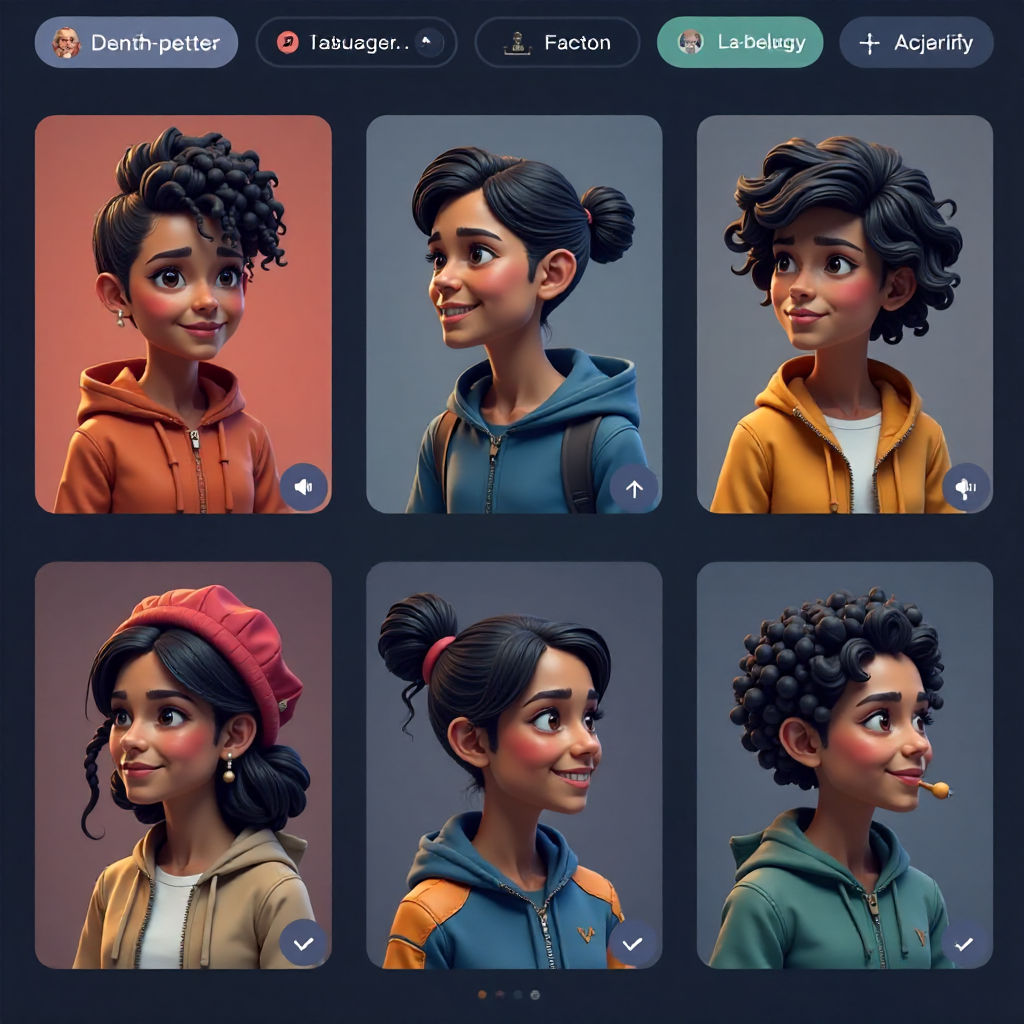
Digital avatars are visual or interactive representations of users within an online environment, ranging from a simple profile photo to a fully animated AI-powered virtual character. They serve as a user's proxy identity inside a platform — the face, persona, or agent through which someone participates.
At the simpler end, an avatar might be a customizable cartoon icon on a forum. At the more sophisticated end, it becomes an AI-driven virtual assistant that speaks, reacts, and adapts in real time. The spectrum matters because engagement benefits scale with complexity: the more expressive and personalized the avatar, the more deeply users tend to invest in the experience.
Platforms today typically deploy avatars in one of three roles: as self-representation tools (the user's chosen identity), as AI characters that guide or interact with users, or as social entities that populate shared virtual spaces. Each role creates different engagement dynamics, but all three share one common thread — they make digital environments feel inhabited rather than empty.
The Psychology Behind Avatar-Driven Engagement
Users connect with avatars because the human brain doesn't cleanly separate digital representations from real identity. When someone customizes an avatar, they're not just picking colors — they're constructing a virtual identity that carries psychological weight.
Researchers have studied what's known as the Proteus Effect, a phenomenon where users begin to behave in ways consistent with their avatar's appearance. An avatar designed to look confident and capable can actually shift how a user performs tasks on a platform. This isn't trivial — it means avatar design directly influences behavior, not just aesthetics.
There's also the dimension of emotional connection. When a platform's AI character responds to a user's actions with appropriate expressions or personalized dialogue, it activates the same social cognition pathways that govern real human interaction. Users feel heard. That feeling drives return visits far more reliably than feature checklists do.
Self-representation through avatars also reduces social anxiety in digital spaces. Users who might hesitate to participate in a live video call or public forum often engage freely when their avatar mediates the interaction. The avatar becomes a comfortable layer between the private self and the public platform.
Key Ways Digital Avatars Boost User Engagement
Digital avatars increase user engagement through four primary mechanisms: personalization, emotional investment, social interaction, and gamification loops. Each one reinforces the others.
Personalization and Ownership
When users can customize their avatar — choosing appearance, accessories, expressions, or voice — they develop a sense of ownership over their platform experience. This investment of time and creative energy creates a switching cost: leaving the platform means leaving the identity they've built. Platforms that offer deep customization consistently report longer average session lengths compared to those with static profiles.
Emotional Investment and Empathy
AI virtual characters that express emotion — surprise, encouragement, frustration — generate genuine empathic responses from users. This emotional connection is not accidental; it's engineered through facial animation, contextual dialogue, and adaptive behavior. A learning platform's avatar tutor that celebrates a correct answer creates a micro-reward loop that keeps users coming back.
Social Interaction Through Virtual Presence
Avatars make other users visible. In platforms where participants are represented by animated characters rather than text names, social interaction rates climb. Users are more likely to initiate conversation, join group activities, and form communities when they can see and respond to each other's virtual presence.
Gamification Loops
Gamification and avatar systems are natural partners. Unlocking new avatar items, earning visual badges, or leveling up a character's appearance gives users tangible rewards for platform activity. These loops are particularly effective because the reward is identity-based — it's not just a point score, it's a visible change to the self users present to others.
How AI Makes Avatars Smarter and More Engaging
Artificial intelligence transforms avatars from static images into responsive, adaptive entities that learn from user behavior. This is where the engagement potential of digital avatars becomes genuinely significant.
Machine learning models can analyze how a user interacts with a platform and adjust an AI character's communication style accordingly. A user who prefers direct, brief responses gets a different interaction pattern than one who engages with longer explanations. This AI-driven personalization happens in the background, but users feel it as a sense that the platform understands them.
Natural language processing (NLP) enables AI avatars to hold contextually coherent conversations rather than cycling through scripted responses. When a virtual assistant on an e-commerce platform can answer nuanced product questions, remember previous interactions, and adapt its tone, users treat it more like a knowledgeable colleague than a chatbot.
Generative AI has pushed this further. Modern avatar systems can synthesize realistic facial expressions, generate personalized dialogue, and even create unique avatar appearances based on user preferences — all in real time. The gap between a digital avatar and a convincing virtual character is closing faster than most platform developers anticipated.
Use Cases Across Different Online Platforms
The practical value of digital avatars shows up differently depending on the platform type, but the engagement benefits are consistent across contexts.
- Gaming platforms pioneered avatar systems, and the model is mature here. Player characters drive emotional investment, social status signaling, and monetization through cosmetic items. Games like Fortnite have demonstrated that avatar customization can become a primary revenue stream precisely because players value their virtual identity.
- Virtual workplaces use avatars to recreate the social texture of physical offices. Platforms like Gather or Meta's Horizon Workrooms found that avatar-based interaction increases informal communication between remote team members — the digital equivalent of hallway conversations.
- E-commerce platforms deploy AI virtual assistants as avatar-style shopping guides. These characters reduce the friction of product discovery and have been shown to increase conversion rates by making the browsing experience feel consultative rather than transactional.
- Online education benefits significantly from avatar tutors. Students who interact with an animated AI character rather than static course materials show higher completion rates, particularly in self-paced environments where external motivation is limited.
- Social platforms use avatars to enable expression in contexts where users prefer not to share real photos — whether for privacy, safety, or creative reasons. This expands participation from demographics that would otherwise stay silent.
Impact on User Retention and Business Outcomes
Avatar systems translate directly into measurable platform metrics. The connection between virtual identity investment and user retention is one of the more consistent findings in platform design research.
Platforms that implement meaningful avatar customization typically observe increases in session length and return visit frequency. The reasoning is straightforward: users who have invested time building a virtual identity have a concrete reason to return that goes beyond the platform's content alone. The avatar itself becomes an anchor.
For business outcomes, the impact extends beyond retention. AI-powered virtual assistants deployed as avatar characters have demonstrated measurable improvements in customer support resolution rates and e-commerce conversion. When users trust a virtual character enough to follow its recommendations, the platform gains a persuasion channel that static UI elements can't replicate.
Community growth is another downstream effect. Platforms where users have visible, expressive avatars tend to develop stronger community identities because members recognize each other across sessions. That social recognition is a powerful driver of organic platform growth.
Challenges and Considerations When Implementing Avatars
Avatar systems deliver real engagement benefits, but implementing them without acknowledging the trade-offs leads to avoidable problems.
The uncanny valley remains a genuine risk. Avatars that attempt photorealistic human appearance but fall slightly short create discomfort rather than connection. For most platforms, stylized or abstract avatar designs outperform near-realistic ones in user acceptance — a counterintuitive finding that's worth building into design decisions early.
Inclusivity in avatar design is often underestimated as a technical challenge. If the default avatar options don't reflect the diversity of a platform's actual user base, the self-representation benefit disappears for excluded groups. Investing in broad representation from the start is significantly cheaper than retrofitting it later.
Data privacy is a serious consideration when AI personalization enters the picture. Adaptive avatar systems learn from user behavior, which means they collect behavioral data. Platforms need transparent data practices and clear user controls — not just for regulatory compliance, but because users who feel surveilled disengage faster than those who feel respected.
Finally, the technical cost of AI-driven avatar systems is non-trivial. Smaller platforms sometimes implement complex avatar features before their infrastructure can support them, resulting in performance issues that undermine the immersive experience they were trying to create. A simple, well-executed avatar system consistently outperforms an ambitious one that runs poorly.
Frequently Asked Questions
What is the difference between a digital avatar and an AI virtual character?
A digital avatar is a user-controlled visual representation, while an AI virtual character is an autonomous agent powered by machine learning and NLP that can interact independently. Many modern platforms blur this line by giving user avatars AI-driven behaviors.
Do avatars improve engagement for all types of online platforms?
Avatars improve engagement most reliably on platforms where social interaction, self-expression, or ongoing participation are core to the experience. For purely transactional platforms — like a one-time ticket booking service — the benefit is smaller and may not justify the implementation cost.
How does avatar customization affect user behavior?
Customization increases ownership and emotional investment, which extends session length and reduces churn. The Proteus Effect also suggests that the traits users assign to their avatar can subtly influence how they behave on the platform — a well-designed avatar system can nudge users toward more constructive participation.
Can small platforms benefit from avatar features, or is it only for large companies?
Small platforms can benefit significantly from even basic avatar systems. A limited but meaningful set of customization options creates identity investment without requiring enterprise-level infrastructure. Starting simple and expanding based on user feedback is a practical approach for resource-constrained teams.
What role does generative AI play in the future of digital avatars?
Generative AI is enabling avatars that can be created from text descriptions, adapt their appearance dynamically, and hold genuinely contextual conversations. The trajectory points toward virtual characters that are increasingly indistinguishable from human-authored interactions — which raises both exciting possibilities and important ethical questions about transparency and user trust.
Digital avatars have moved well past the stage of being a cosmetic feature. When designed with psychological insight and powered by modern AI, they become one of the most effective tools a platform has for building the kind of user engagement that actually lasts.